
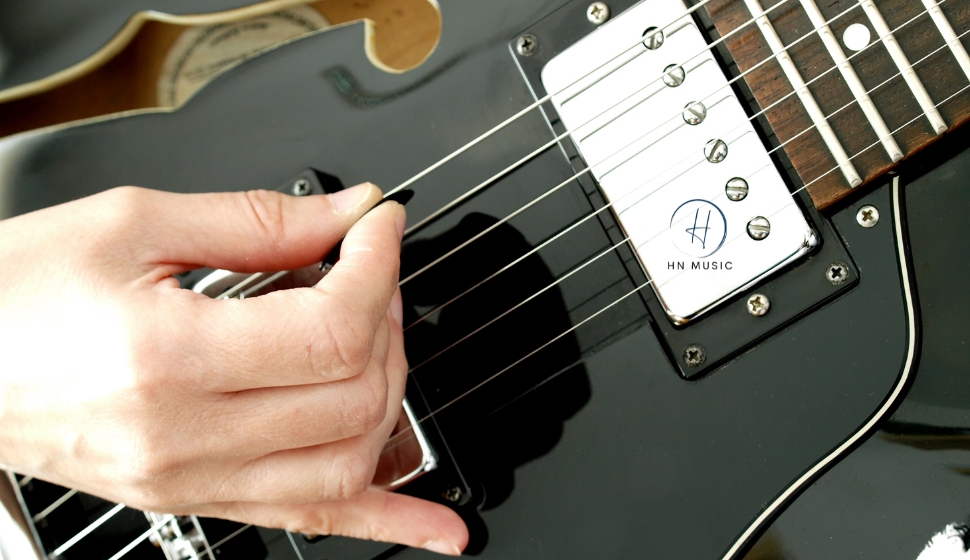
Unlocking the Fretboard: Tips for Understanding Guitar Scales
Understanding guitar scales is one of the most essential components of mastering the instrument. It allows you to navigate the fretboard with confidence, compose original music, and improvise solos that sound polished and professional. In this blog, we will explore various tips and techniques to help you unlock the mysteries of the fretboard and develop a comprehensive understanding of guitar scales.
1. The Basics: What are Guitar Scales?
A scale is a sequence of musical notes ordered by pitch. Scales serve as the foundation for melodies, harmonies, and improvisations. On the guitar, scales are visualized as patterns of notes across the strings and frets. The most common scale is the major scale, which consists of seven notes and follows a specific pattern of whole and half steps.
2. The Major Scale: Your First Step
The major scale is fundamental to understanding other scales and modes. It follows the pattern of whole steps (W) and half steps (H) as: W-W-H-W-W-W-H. For example, in the key of C major, the notes are C, D, E, F, G, A, and B. Practicing the major scale in different positions and keys on the guitar will help you become familiar with the fretboard.
3. The Minor Scale: Adding Emotion
The natural minor scale provides a different emotional quality compared to the major scale. Its pattern is W-H-W-W-H-W-W. For instance, the A minor scale consists of the notes A, B, C, D, E, F, and G. Learning both major and minor scales will give you a broader palette of sounds to work with.
4. Scale Patterns: Unlocking the Fretboard
To efficiently navigate the fretboard, guitarists often use scale patterns or “boxes”. These patterns are repeated shapes that can be moved up and down the neck. The CAGED system is a popular method for learning these patterns. It divides the fretboard into five overlapping shapes based on open chord forms: C, A, G, E, and D.
5. The CAGED System: A Closer Look
Each letter in CAGED corresponds to a chord shape and its related scale pattern. For example, the “E” shape can be used to play a major scale pattern starting from any root note on the E string. By learning and connecting these five patterns, you can play major scales across the entire fretboard.
6. Pentatonic Scales: Simplifying Complexity
Pentatonic scales are five-note scales that are easier to learn and play than seven-note scales. The major pentatonic scale uses the 1st, 2nd, 3rd, 5th, and 6th notes of the major scale. The minor pentatonic scale consists of the 1st, flat 3rd, 4th, 5th, and flat 7th notes of the minor scale. These scales are widely used in rock, blues, and pop music.
7. Connecting Pentatonic Shapes
Just like the major scale patterns, pentatonic scales can also be visualized as shapes on the fretboard. There are five main pentatonic shapes that cover the entire neck. Learning to connect these shapes will help you move fluidly across the fretboard and improvise more effectively.
8. Modes: Expanding Your Musical Vocabulary
Modes are variations of the major scale that start on different notes. Each mode has its own unique sound and mood. The seven modes are Ionian (major), Dorian, Phrygian, Lydian, Mixolydian, Aeolian (natural minor), and Locrian. Understanding modes can add depth and variety to your playing.
9. Practicing Scales: Tips for Success
Effective practice is key to mastering scales. Here are some tips to help you make the most of your practice sessions:
- Use a metronome to develop timing and accuracy.
- Start slowly and gradually increase your speed.
- Practice in different keys and positions.
- Improvise using the scales you are learning.
- Record yourself to track your progress and identify areas for improvement.
10. Applying Scales: Making Music
Scales are not just technical exercises; they are tools for making music. Use scales to create melodies, harmonies, and solos. Experiment with different scales to find the sound that best suits your musical ideas. Listen to and analyze solos by your favorite guitarists to see how they use scales in their playing.
11. Ear Training: Developing Your Musical Ear
Being able to recognize and play scales by ear is an invaluable skill. Practice singing scales and intervals to improve your ear. Transcribe solos and melodies by ear to reinforce your understanding of scales and their application.
12. Advanced Techniques: Beyond the Basics
Once you are comfortable with basic scales, explore more advanced techniques such as:
- Modes and modal interchange.
- Harmonic and melodic minor scales.
- Exotic scales like the whole tone and diminished scales.
- Arpeggios and scale sequences.
13. Conclusion: Unlocking Your Potential
Mastering guitar scales is a journey that requires dedication and practice. By understanding and practicing scales, you will unlock the fretboard and expand your musical horizons. Whether you are a beginner or an experienced player, there is always more to learn and discover. Keep exploring, practicing, and making music, and you will continue to grow as a guitarist.
14. Resources: Further Learning
To help you continue your journey, here are some recommended resources:
- Books: “The Guitar Handbook” by Ralph Denyer, “Fretboard Logic” by Bill Edwards, “The Advancing Guitarist” by Mick Goodrick.
- Online Courses: JustinGuitar, TrueFire, Guitar Tricks.
- Apps: Fretboard Trainer, Guitar Toolkit, Yousician.
15. Community: Connect with Fellow Guitarists
Join online forums and social media groups to connect with other guitarists. Share your progress, ask questions, and learn from others. Playing with other musicians can also provide valuable experience and inspiration.
By following these tips and dedicating yourself to consistent practice, you will unlock the fretboard and gain a deeper understanding of guitar scales. Enjoy the journey and the music you create along the way!

You may also like

The Importance of Ear Training for Guitarists